
Case study
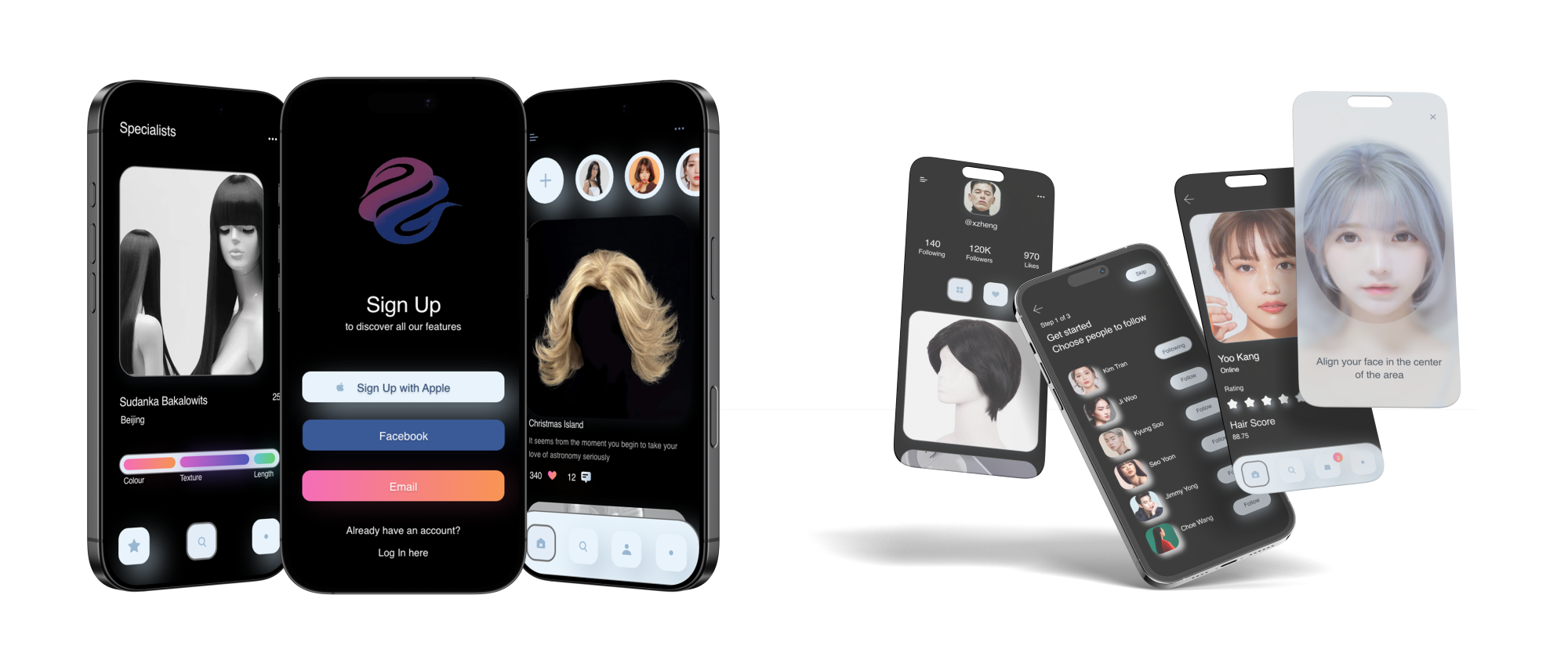
Pelo Base is a school project designed to reduce anxiety around hair loss and give usersmore freedom to explore different hair colors and styles through wigs. The app combinespersonalized wig recommendations with social features, allowing bloggers to share theirfavorite wigs while users can like, comment, forward posts, and rate hairstyles for a moreengaging experience. On the home page, the system recommends wig styles based onuser preferences such as hairstyle, color, and length, helping users discover options thatsuit them best. Users can also follow bloggers, interact with comments, and share theirown favorite styles and photos on personal profiles. This project was completed over twomonths as a solo designer, during which I led the entire product and experience designprocess from concept to final UI.
Challenge
The challenge behind Pelo Base was addressing both the emotional and practicaldifficulties people face when dealing with hair loss. Existing wig shopping platforms oftenfocus only on product listings, offering limited personalization and little emotional support,which can make users feel overwhelmed, insecure, or disconnected from the experience.Many users struggle to imagine how different hairstyles, colors, or lengths would suit them,while social interaction and inspiration are scattered across multiple platforms. At thesame time, content from bloggers and real users is rarely integrated into the decisionmaking process in a meaningful way. This project aimed to solve these issues by creatinga more supportive, engaging, and personalized experience that combines recommendationsystems with social interaction, helping users feel more confident and less anxious whenexploring wig styles.
Analysis
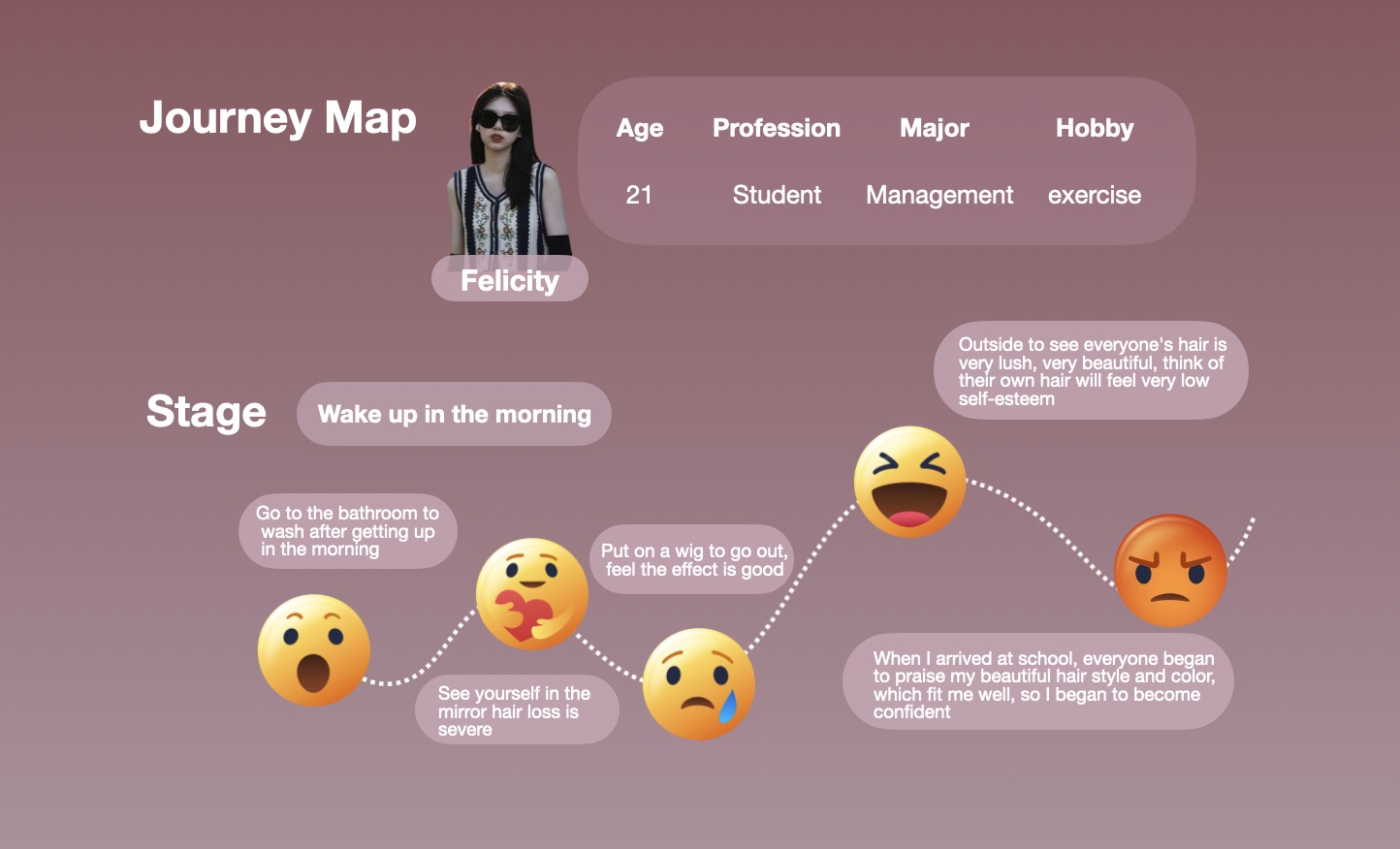
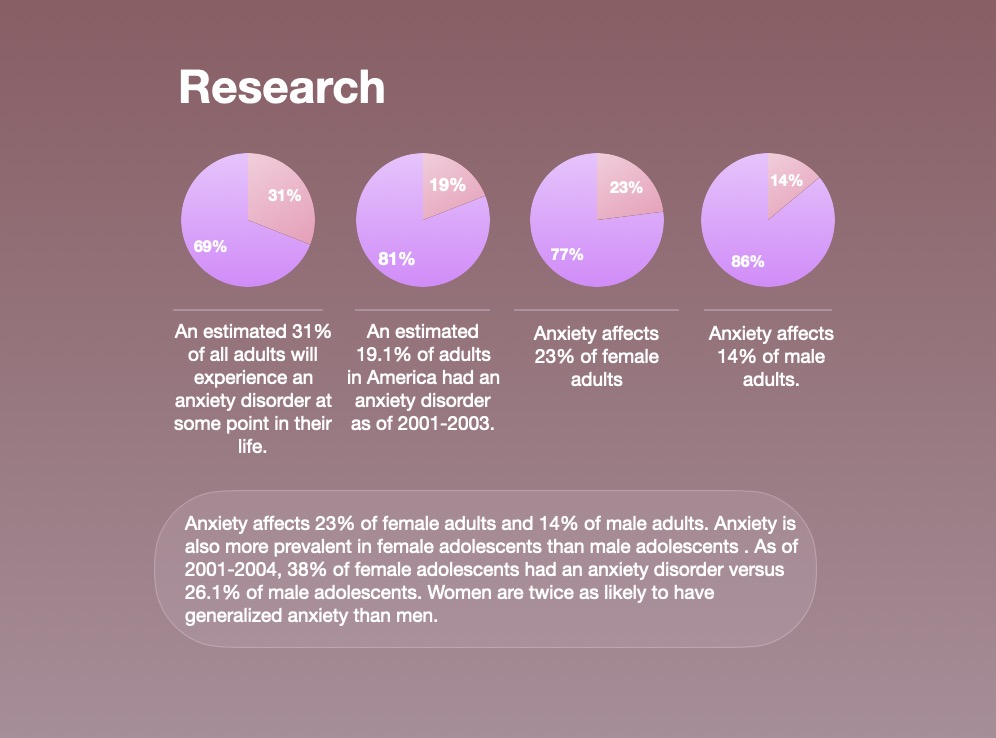
To identify and understand the core problems, I began with qualitative user research,including interviews with college students and young creatives who had experience withwigs or anxiety related to hair loss. These conversations helped uncover emotional painpoints such as low confidence, uncertainty when choosing styles, and concerns aroundhygiene and authenticity. I then combined these insights with secondary research onanxiety related data to understand the broader context and prevalence of appearancebased anxiety. By synthesizing interview findings and data, I defined the problem as notonly a functional issue of finding suitable wigs, but also an emotional challenge ofreassurance and self expression. To prioritize the problems, I focused on issues thatdirectly impacted user confidence and decision making, such as lack of personalization,difficulty imagining outcomes, and the absence of social validation. These high impact painpoints were most relevant to the product’s goals and directly informed later designdecisions around recommendation systems, social interaction, and user generated content.
Design goal & business goal
The design goal of Pelo Base is to create a platform that helps users feel more confidentwhen exploring wigs by reducing anxiety and decision making friction, while increasingengagement through personalized recommendations and social interaction. By combiningcontent from bloggers with user generated reviews and ratings, the product aims to buildtrust, encourage discovery, and keep users returning to the platform. From a designperspective, the goal was to translate emotional needs into clear, supportive experiencesby prioritizing personalization, intuitive information architecture, and visual clarity. Thedesign focuses on helping users quickly find styles that match their preferences,understand how different wigs might suit them, and feel reassured through socialfeedback. Together, these design and business goals work to create a product thatbalances emotional comfort with long term user engagement and platform growth.
Research
Who are the users
The primary users of Pelo Base are young adults who experience hair loss, damaged hair, or anxiety related to their appearance. Many of them are college students, artists, or creatives who value self expression and care deeply about how they look. They are open to trying wigs as a way to change their hairstyle or color, but often feel uncertain, insecure, or overwhelmed during the process. For these users, wearing a wig is not only a functionalchoice, but also an emotional one tied to confidence and identity.

User needs
Through interviews, I learned that users have mixed feelings about wearing wigs. Whilethey appreciate the freedom to change hairstyles and avoid hair damage, they often worryabout hygiene, comfort, and whether a wig will truly suit them. Many participantsdescribed feeling anxious during the selection process, especially when they could not seerealistic examples or receive feedback from others. Some users shared that wigs actuallyboosted their confidence, particularly when they were experiencing hair loss or strugglingwith low self-esteem. Overall, users are not simply looking to browse products. They wantreassurance, realistic references, personalization in style, color, and length, and a sense ofsocial support through real stories, comments, and ratings. For them, wigs are both apractical solution and a powerful tool for self expression.
How it influenced my design
This research helped me understand that Pelo Base should focus on emotionalreassurance as much as functional discovery. Instead of designing a purely transactionalplatform, I prioritized features that help users feel supported and confident. This led todesign decisions such as a preference based recommendation system, blogger contentand ratings, and social interactions that allow users to learn from others’ experiences. Theoverall goal was to create an environment where users feel safe exploring new styles andexpressing themselves without judgment.
Synthesize & Ideation
Early ideas after research
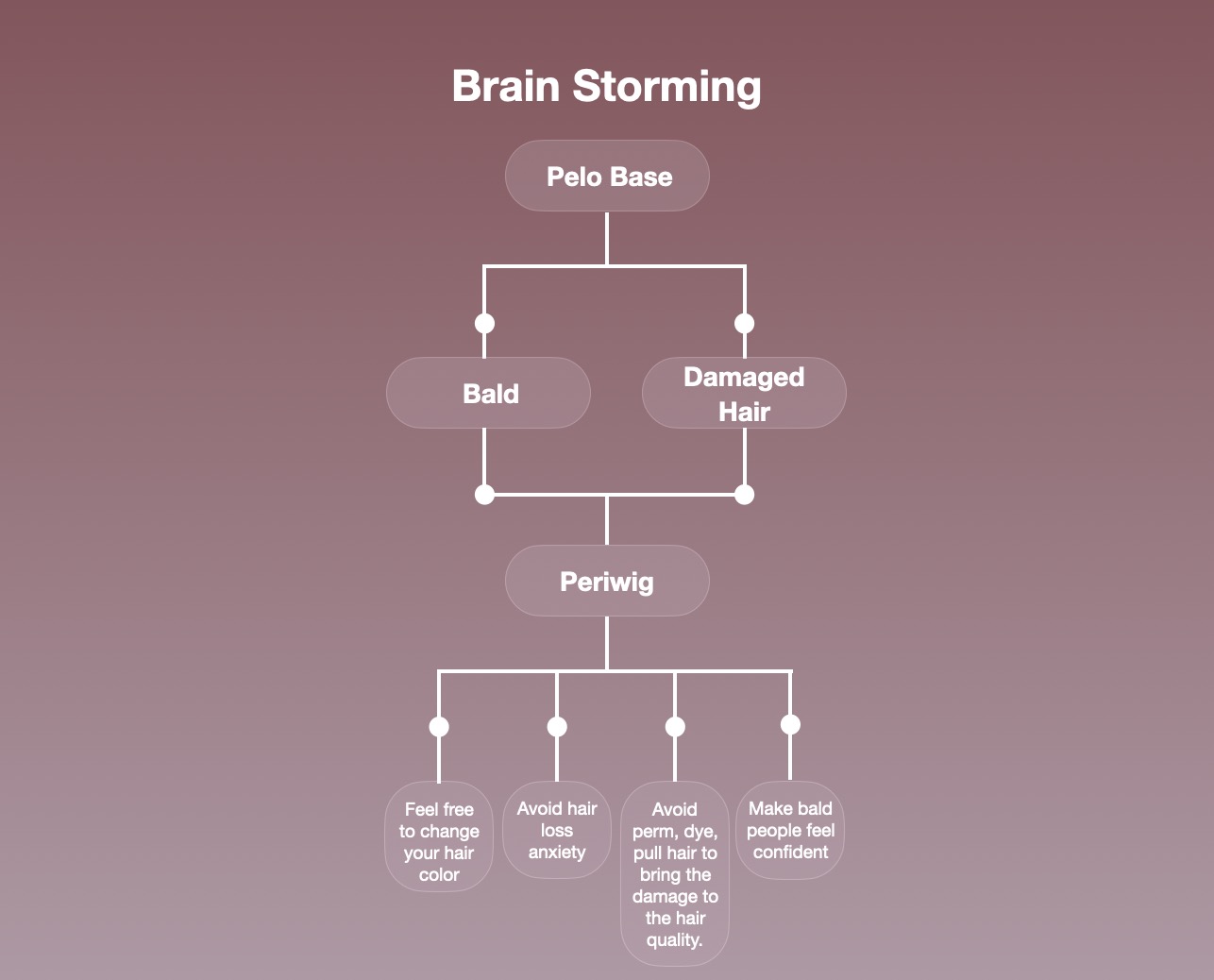
After understanding users’ emotional and practical pain points around hair loss, our early idea was to create an app that does more than simply recommend wigs. We wanted Pelo Base to feel like a supportive and safe space where users can explore different hairstyles
without pressure or judgment. Instead of focusing on selling products, the concept emphasizes reassurance, self expression, and confidence building through personalization and social interaction.
User flow & use cases
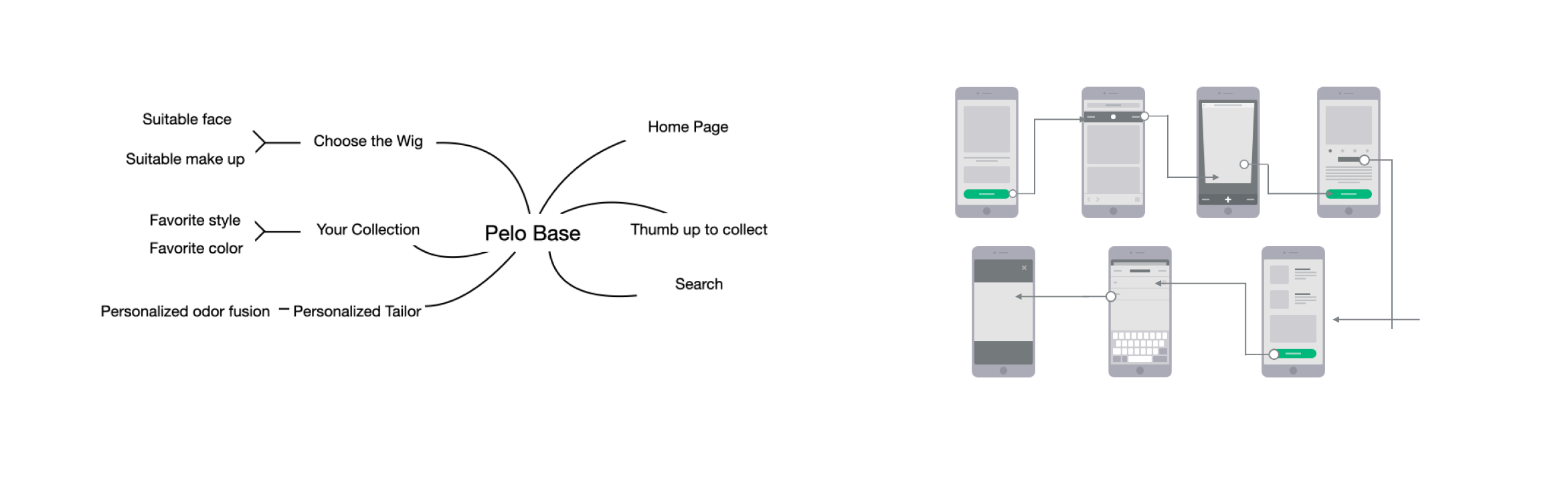
We mapped a simple and low pressure user flow to help users ease into the experience. It begins with onboarding and a home feed where users select their preferences, such as hairstyle, color, and length. Based on these choices, the system generates personalized
wig recommendations tailored to their needs. From there, users can explore blogger posts, real life photos, ratings, and comments to gain more realistic references and reassurance. As they grow more comfortable, they can interact by liking, commenting, rating hairstyles, and saving their favorite looks. Finally, each user has a personal profile where they can share their own wig styles and keep track of what they like. This flow allows users to move naturally between exploration, inspiration, and self-expression without feeling pressured.
Information architecture
The information architecture focuses on clarity and emotional comfort rather than complexity. Core sections are organized around user intent instead of product categories, including Home, Discover, Bloggers, and Profile. This structure helps users quickly find
inspiration, compare styles, and feel supported by real experiences rather than overwhelmed by options.
Inspiration & competitive insights
I explored both wig shopping apps and social platforms to understand how users discover and decide on hairstyles. Most wig apps, such as UNice, Luvme Hair, and Lolly Hair, focus on efficient browsing and purchasing. They offer structured catalogs and filters, but the experience is largely product driven, with limited emotional support for users who feel uncertain or anxious about choosing a wig.
Social platforms like Instagram, TikTok, and Pinterest take a different approach. Discoveryis shaped by interaction—likes, comments, saves, and sharing which helps users build confidence through real people and real feedback rather than marketing images alone.
These insights shaped Pelo Base as a hybrid experience. Product discovery and preference filtering are informed by wig shopping apps, while social interactions and user generated content are inspired by social platforms. By combining both, Pelo Base supports practical decision-making while also offering emotional reassurance during exploration.
How & design
Design Exploration
I started with low-fidelity wireframes to quickly map out the main screens and user flow. At this stage, my focus was on making sure users could move easily between browsing styles, viewing community content, and managing their profiles. Once the flow felt clear, I
moved into high-fidelity design to test layout, color, and interaction details. I tried different versions of the home feed and recommendation cards, gradually simplifying the layout to make the interface feel calmer and easier to scan.
Feedback & Iteration
I gathered feedback from classmates and friends who matched the target users. Some felt the early version of the home feed was too crowded, and others were confused about why certain wigs were recommended. Based on this feedback, I reduced visual elements, increased spacing, and made recommendation tags more visible. I also adjusted the size and contrast of interaction buttons so actions like liking and saving felt easier to notice and use.
Constraints & Design Decisions
The project was completed in two months, so I focused on core features instead of adding complex functions. As a solo designer, I designed interactions that felt realistic for a mobile app. Features like real time try on were out of scope, so I used preference based recommendations and social feedback to support user decisions instead. This helped keep the design focused and practical.
Final Outcome
The final result is a mobile app concept that combines wig recommendations with community interaction. Users can set preferences, explore recommended styles, view real user content, and share their own looks. The high-fidelity designs focus on clear layout and simple interactions, with small animations and feedback to make the experience feel smooth and responsive.
Impact
After completing the high-fidelity designs, I conducted informal user testing with classmates who matched the target users. I asked them to walk through key flows such as onboarding, browsing recommendations, and interacting with community content. Most users said the app felt calm and easy to navigate, and they appreciated being able to see real people instead of only product images. Several users mentioned that the preferencebased recommendations made them feel more confident and less overwhelmed when choosing styles. Some feedback also helped me refine interaction details, such as making recommendation tags and social actions more visible.
I presented Pelo Base in class to both peers and instructors, explaining the research background, design process, and final solution. The project received strong feedback for addressing an emotional problem through a clear and thoughtful UI approach, and it was awarded First Place in the class presentation.
Reflection
This project helped me understand what it really means to design for emotional situations, not just usability. One thing that worked well was starting from users’ feelings instead of features. Focusing on anxiety, confidence, and uncertainty helped me shape the recommendation system and community features in a clear and consistent way.
There were also clear limitations. User testing was informal and small in scale, which means some decisions were based on limited feedback. Because of time constraints, I focused mainly on core flows and did not fully explore edge cases, long-term usage, or content moderation in a social environment.
Through designing Pelo Base, I learned that appearance-related products require a different design mindset. Users are more sensitive, so tone, pacing, and clarity matter as much as functionality. Good design in this space should slow users down, reduce pressure, and provide reassurance through real examples and social context. Small details like spacing, labels, and interaction feedback can have a strong emotional impact.
If I had more time, I would start by conducting more structured user testing with a broader group of users. I would also explore how personalization could adapt over time based on user behavior, rather than relying only on initial preferences. Another next step would be refining onboarding to make the first experience feel even more supportive and guided.
For future iterations, I would improve filtering and content organization, and give users more control over what they see. If this product continued to grow, I would also focus on trust and moderation features to support a healthy community. If I were to redesign the project, I would spend more time validating emotional responses, not just usability, before finalizing key design decisions.
